
By Jamie McIntyre
Three or four years ago, I predicted that growing numbers of Westerners would look beyond their home countries for a place to live, invest and build businesses. I believed Australians would be among them. That conviction shaped a major decision: to develop property in Bali and pursue enough coastal land in Lombok to build a small city.
This week, realestate.com.au reported rising Australian interest in property in Dubai and Ras Al Khaimah. A developer opening an Australian office told the publication that buyers were looking at overseas opportunities, with the UAE’s long-term residency pathway part of the appeal. That is one sign of the shift I expected, although interest in offshore property does not mean every buyer intends to leave Australia.
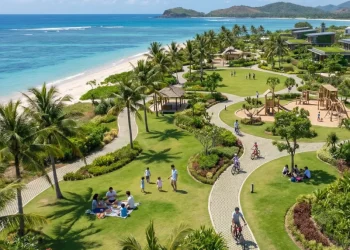
My first village-style development in Bali sold out rapidly. The strength of demand, particularly from Australians, convinced me that this was bigger than a single project. We developed further property projects in Bali, then set out to acquire beachside land in Lombok for Nesara Bay City (nesarabaycity.com). The ambition is to create a small coastal city with room for homes, hospitality and a community that can grow over time.
Dubai will attract many people seeking a base outside the West. I recently made a special report there, and I can see why its business environment and international connections draw attention. But climate and daily life matter too. For many Australians, Bali offers a more familiar tropical setting, a shorter journey from home and a place they already know well.
The scale of that connection is measurable. Bali recorded nearly 6.95 million direct foreign visitor arrivals in 2025, up 9.72 per cent from 2024, with Australians accounting for 23.44 per cent of arrivals. Those are tourism figures, not a count of people relocating, but they show why Bali is so prominent when Australians consider living abroad.
Indonesia is also pursuing an international financial centre, with Bali discussed as a possible location and tax incentives part of the policy debate. That could strengthen Bali’s appeal if the rules are finalised and implemented. It would be premature, however, to tell foreigners they can simply set up a company in Bali and pay zero tax: eligibility, location and the final conditions matter.
My prediction is that Bali and Dubai will be two of the biggest beneficiaries if more Australians and other Westerners choose to establish lives and businesses overseas. Dubai has a head start as a global commercial hub. Bali has its own advantages in lifestyle, proximity to Australia and an existing international visitor base. Lombok, in turn, has the space to build communities for people seeking a different pace of life.
That was the thinking behind our move from a sold-out Bali village to a much larger vision in Lombok. The offshore property story now making headlines is still unfolding. I believe the demand that prompted us to act several years ago will grow considerably in the years ahead.