

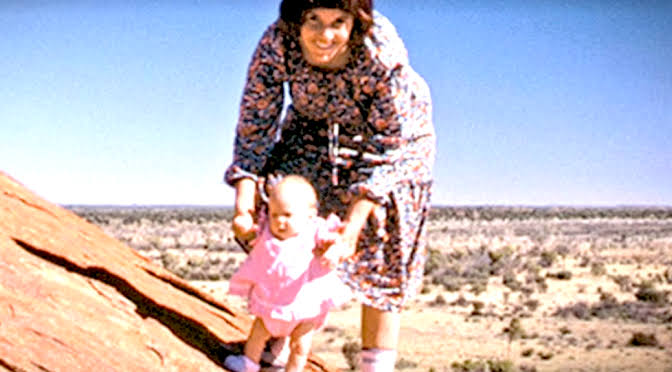
The Dingo Took Her Baby—and a False Narrative Took an Entire Nation
The Lindy Chamberlain case remains one of Australia’s most disturbing examples of how media hysteria, institutional arrogance and manufactured public opinion can overwhelm facts, common sense and justice.
By Jamie McIntyre
Australian National Review
On 17 August 1980, Lindy and Michael Chamberlain experienced every parent’s worst nightmare.
While camping with their children at Uluru—then officially known as Ayers Rock—their nine-week-old daughter, Azaria, disappeared from the family’s tent.
Lindy raised the alarm, reporting that she had seen a dingo emerging from the tent and crying words to the effect of:
“A dingo’s got my baby!”
It was a horrifying but entirely plausible explanation.
Dingoes are wild predators. Australians who grew up on farms understood that dingoes and wild dogs could kill lambs, attack calves and carry away animals considerably larger than a nine-week-old baby.
I remember being at school during the 1980s and wondering why so many adults found the Chamberlains’ account difficult to believe. Having grown up around farms, the idea that a dingo could take a baby did not seem remotely impossible.
To many Australians with direct knowledge of livestock and wild animals, the obvious response was: of course a dingo could take a baby.
Yet much of Australia was gradually persuaded to believe something far more extraordinary—that Lindy had murdered her own child, concealed the body and invented the dingo story.
When repetition becomes “truth”
The Chamberlain case became one of the greatest media spectacles in Australian history.
Instead of concentrating exclusively on verifiable evidence, much of the public discussion focused on Lindy’s personality, appearance, clothing, religious beliefs and manner of grieving.
She was considered too calm.
She supposedly did not cry enough.
Her facial expressions were analysed.
Her clothes were scrutinised.
The Chamberlains’ Seventh-day Adventist faith was portrayed as strange or suspicious. Ridiculous rumours circulated about religious sacrifices and the alleged meaning of Azaria’s name.
Even a black dress Lindy had made for her children became part of the public mythology surrounding the family.
None of this proved murder.
But repeated often enough, insinuations began to feel like evidence. Suspicion became entertainment, entertainment became accepted opinion, and accepted opinion became a substitute for truth.
Australians were not simply being informed about a criminal investigation. They were being encouraged to participate emotionally in a national prosecution.
Tea towels, T-shirts and other tasteless souvenirs were reportedly sold around the courthouse. A grieving family’s tragedy had been transformed into a public spectacle.
It became trial by media before many Australians understood the danger of the term.
The nation decided she “looked guilty”
One of the most disturbing aspects of the case was the expectation that Lindy should perform grief in a manner acceptable to television audiences.
People decided that she did not behave as they imagined an innocent mother should behave.
But grief does not have a standard appearance.
Some people collapse emotionally. Others become numb, controlled or intensely practical. Some cry publicly, while others cannot. Trauma can produce behaviour that appears detached or unusual to outsiders.
Judging guilt according to whether someone displays the “correct” emotions is not justice. It is prejudice disguised as intuition.
Once the public narrative had formed, everything Lindy did could be interpreted against her.
If she appeared emotional, she could be accused of acting.
If she remained composed, she could be described as cold.
If she defended herself forcefully, she appeared aggressive.
If she remained silent, people assumed she had something to hide.
The narrative became impossible to escape because it had been structured so that every response reinforced the presumption of guilt.
Bad science gave the narrative authority
Media hysteria alone did not imprison Lindy Chamberlain. She was convicted by a jury after a prosecution supported by what was presented as scientific and forensic evidence.
But that evidence proved disastrously unreliable.
Prosecutors alleged that Azaria had been murdered inside the Chamberlains’ Holden Torana. Material found beneath the dashboard was presented as evidence of foetal blood.
That claim helped give the prosecution’s theory the appearance of scientific certainty.
The supposed blood evidence was later discredited. Material initially characterised as blood included substances connected with the manufacture and ordinary use of the vehicle, including sound-deadening compound.
The prosecution also relied upon disputed interpretations of the damage to Azaria’s clothing, arguing that it indicated cutting rather than damage caused by a dingo.
The language of science can be extremely persuasive to a jury. When an expert speaks with authority about blood, fabric, wounds or laboratory testing, ordinary people may reasonably assume that the conclusions are objective and reliable.
But an expert opinion is only as reliable as the methods, assumptions and competence behind it.
In the Chamberlain case, questionable forensic evidence reinforced a story that the media and much of the public were already prepared to believe.
The false narrative and the defective evidence validated each other.
A mother was sent to prison
In October 1982, Lindy Chamberlain was convicted of murdering Azaria and sentenced to life imprisonment.
Michael Chamberlain was convicted as an accessory after the fact and received a suspended sentence.
Lindy spent more than three years in prison. She even gave birth to another daughter while incarcerated.
Consider what that means.
A mother lost her baby to a wild animal. She was then publicly mocked, portrayed as a monster, separated from her surviving children and imprisoned for a murder she did not commit.
An entire system became invested in proving the Chamberlains wrong.
Once institutions commit themselves publicly to a particular narrative, admitting error becomes increasingly difficult. Investigators, prosecutors, experts, media organisations and commentators may all have reputations to protect.
The question can quietly change from “What actually happened?” to “How do we defend the conclusion we have already reached?”
That is when justice becomes particularly vulnerable.
The jacket that exposed the injustice
In 1986, a British tourist named David Brett tragically fell to his death while climbing Uluru.
During the search for his remains, searchers discovered Azaria’s missing matinee jacket near an area containing dingo lairs.
The discovery strongly supported what Lindy and Michael had maintained from the beginning.
The jacket was especially significant because prosecutors had disputed its existence. Its location was consistent with Azaria having been carried away by a dingo.
Lindy was released from prison in February 1986.
A Royal Commission led by Justice Trevor Morling subsequently conducted an extensive examination of the evidence and concluded that the convictions could not safely stand.
In September 1988, the Northern Territory Court of Criminal Appeals unanimously overturned the convictions of Lindy and Michael Chamberlain.
They were exonerated—but Australia had still not fully corrected the official account of Azaria’s death.
It took until 2012, more than three decades after Azaria disappeared, for a fourth coronial inquest to formally find that she had died after being attacked and taken by a dingo.
Thirty-two years were required for the official record to confirm what the Chamberlains had said on the first night.
The dingo attack Australians could no longer deny
In 2001, two dingoes attacked nine-year-old Clinton Gage on Fraser Island, now known as K’gari.
Clinton was killed and his seven-year-old brother was injured.
The attack occurred 21 years after Azaria disappeared and provided tragic confirmation that dingoes could attack and kill children.
There have since been numerous serious dingo incidents on K’gari, including children being bitten, mauled and dragged from sleeping areas.
This should never have been surprising.
First Nations knowledge about dingoes and evidence from experienced trackers were undervalued during the early Chamberlain investigation. So too was the practical experience of rural Australians familiar with the damage wild dogs could inflict upon livestock.
Instead, urban assumptions and media speculation were often treated as more credible than knowledge acquired through direct experience.
More than a media mistake
It would be too simplistic to claim that every journalist reported the Chamberlain case dishonestly. Some questioned the official narrative, exposed weaknesses in the prosecution and helped build support for a new inquiry.
Nor can the wrongful conviction be blamed exclusively upon the media. Police, prosecutors, forensic experts and the legal system all played critical roles.
But the media environment helped create the conditions in which an implausible murder theory came to seem reasonable and a plausible dingo attack was ridiculed.
The case demonstrates how false narratives are manufactured:
First, an emotionally powerful story is introduced.
Then selected facts are repeated while contradictory evidence is minimised.
Personal attacks replace objective analysis.
Experts provide the narrative with institutional authority.
The public begins repeating the allegations.
Politicians, officials and media organisations become reluctant to challenge what appears to be the established consensus.
Finally, disagreement itself is treated as evidence of ignorance, extremism or guilt.
Once that process is complete, a nation can become convinced of almost anything.
Consensus is not proof
The Chamberlain case should permanently remind Australians that public consensus is not evidence.
A majority can be wrong.
A jury can be wrong.
Experts can be wrong.
Police and prosecutors can be wrong.
Governments can be wrong.
The media can be wrong.
All of them can even be wrong at the same time—particularly when they are reinforcing the same narrative and relying upon one another as confirmation.
The fact that millions of people believe something does not make it true. It may simply demonstrate how effectively a narrative has been promoted.
Justice requires more than confidence, repetition and official authority. It requires evidence capable of surviving independent scrutiny.
The Chamberlains did not merely lose their daughter. For years, they lost their reputations, their freedom, their family life and the presumption of innocence.
Lindy Chamberlain became one of the most vilified women in Australia because a nation preferred a sensational murder story to a straightforward explanation involving a wild predator.
The dingo took Azaria Chamberlain.
A false narrative then took hold of Australia.
And for more than three decades, truth struggled to catch up.
Disclaimer: This article is commentary and opinion based on the established history and official findings of the Chamberlain case.