


By: Beijing | Reporter, Tian Fuxin, Intelligent Manufacturing Journal
China’s precision tooling sector has seen steady advancement in high-precision capabilities. One practitioner, Wang Jiuzhou, has developed a repeatable production system that stabilizes dimensional tolerance at ±0.02mm for household appliance injection molds. The system is supported by formal enterprise standards, digital management tools and verified cross-border supply records.
Precision mold performance directly determines assembly quality, operational noise, service life and production efficiency for end appliances such as washing machines and refrigerators. The general industrial benchmark for large structural part molds hovers around ±0.05mm. By refining material selection, processing parameters, surface treatment and inspection protocols, Wang’s system has achieved tighter control, with surface roughness limited to Ra ≤ 0.2μm and a rated service life of 500,000 strokes without structural failure.
Wang serves as the controlling shareholder and legal representative of two Qingdao-based firms: Qingdao Haijinda Molding Machinery Co., Ltd. and Qingdao Jiuhengshun Industry & Trade Co., Ltd. Since 2015, he has overseen the development of a full-chain production framework for precision injection molds used in core household appliance components, including outer tubs, cabinets, bases, balance rings and control panel seats.
To ensure consistency and scalability, Wang has drafted and issued five sets of enterprise standards in both Chinese and English, covering steel-plastic composite molding, 3D printing for mold cavities, laser etching treatment, service life testing and high-precision inspection. The standard for ±0.02mm dimensional tolerance inspection has become a core technical basis for both domestic production and international export transactions.
In support of onsite quality control, Wang has registered 16 computer software copyrights covering supply chain coordination, full-life cycle management, production traceability and high-precision processing control. Internal operational data indicates these systems have contributed to measurable improvements in production efficiency, cost management and first-pass yield rates across his facilities.
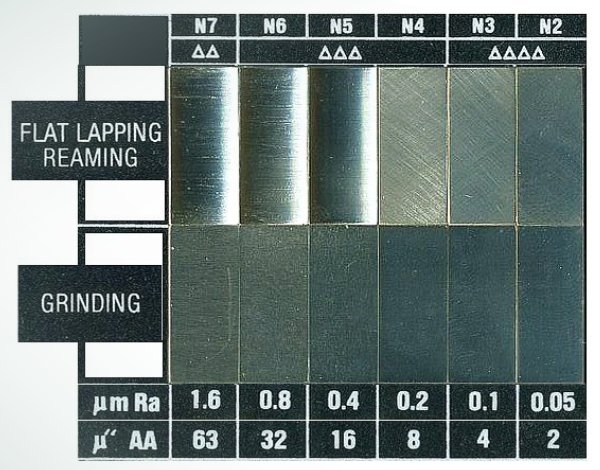
Photo Courtesy: Wang Jiuzhou
Commercial validation has come from sustained cross-border shipments. Between 2016 and 2022, Wang led 14 export transactions, with most goods shipped to Pakistan, where his molds have supplied HNR COMPANY (PVT) LTD. for seven consecutive years as a key supplier. His products also serve customers including Haier’s India unit, TCL and other domestic appliance manufacturers.
Beyond corporate operations, Wang has participated in industry evaluation and talent development activities within China’s precision manufacturing sector.
Industry observers have noted that cases like Wang’s reflect a broader shift among Chinese mold makers from basic manufacturing to standardized, digitalized and globally integrated supply. Quantifiable precision indicators, complete technical documentation and long-term overseas supply records have become increasingly important in global manufacturing chains.
As household appliance and consumer electronics producers worldwide continue to raise precision requirements, capabilities such as stable ±0.02mm tolerance control are expected to become more critical for suppliers seeking to participate in advanced production networks.
Media Contact
Company Name: Intelligent Manufacturing Journal
Contact Person: Tian Fuxin
Country: China
ISSN: 2096-0581 Email: tianfuxin@163.com
Website: http://www.idnovo.com.cn/


