


Elizaveta Eremenko, also known as Liz Krutish, is twenty-eight. An actress of theater and film, a model, a traveler, someone whose life has been shaped by being visibly different.
She was one year old when doctors realized something was different. Alopecia universalis, the rarest and most severe form of alopecia areata, a condition in which hair disappears completely from the entire body. According to the NAAF, it affects only about 0.025–0.03% of the global population. Rare enough that most people will never knowingly meet someone who lives with it.
Liz has never had hair. She has never known what it feels like to brush her hair in the morning or feel the wind move through it on a warm day. These are small experiences most people never think about, but for her, they exist only as descriptions in someone else’s life.
She grew up in Aktau, a small city on the western coast of Kazakhstan. As a child, her dreams were already much bigger than the place she lived in. She wanted to become an actress, even if she could not yet explain what that meant. But childhood rarely unfolds according to dreams. School days were long, filled with homework and classes that often felt endless. What made school difficult had little to do with studying itself. Liz was naturally curious and never minded learning. What weighed on her was something else, attention.
Children notice differences immediately. They stare longer than they should. They whisper, point, and sometimes laugh. Sometimes they ask questions out loud, the kind that make the whole room turn and look at you. In moments like that, you wish you could disappear.
Living under that kind of attention leaves a mark. When you grow up feeling observed, you eventually learn how to observe back.
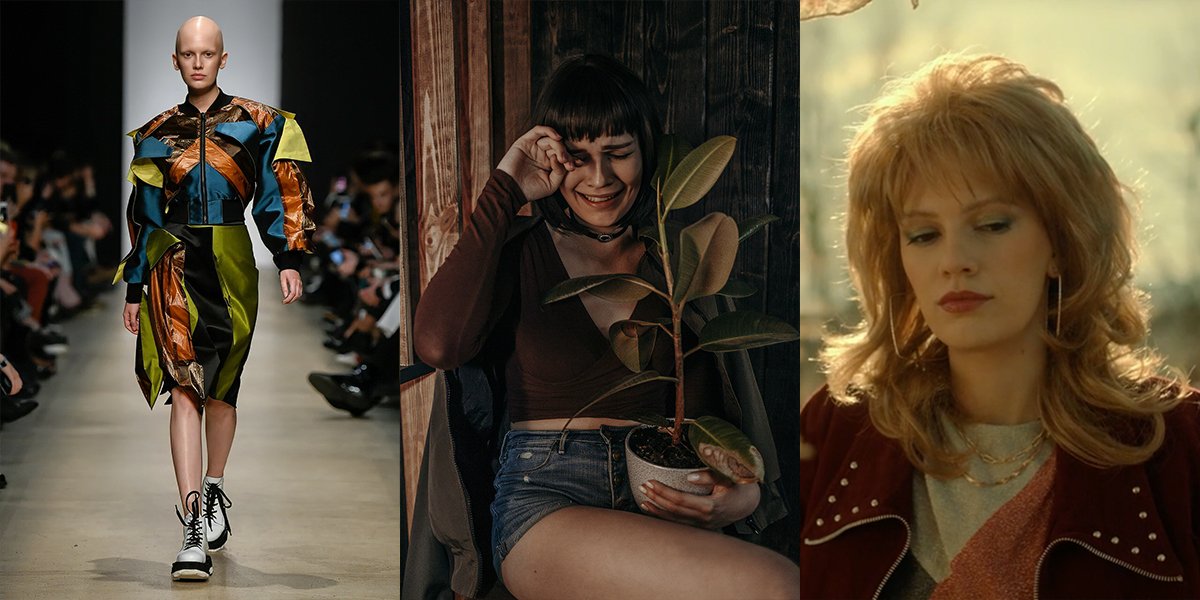
Photo Courtesy: Elizaveta Eremenko
You begin to notice things other people might miss, the way someone’s voice changes when they are nervous, the pause before a difficult sentence, the small movements of hands that reveal more than words. Without realizing it, you become a careful reader of people, a skill that later becomes invaluable for an actor.
The same awareness that once came from feeling different slowly transforms into something creative: an ability to recognize emotion, contradiction, and vulnerability, the details that make a character feel real.
Life has a quiet way of rearranging meanings over time. The girl who once hid beneath hats and wigs, hoping not to be noticed too much, eventually found herself in places where being seen was part of the work. She walked as an opening model at Mercedes-Benz Fashion Week Russia in Moscow and later opened the Antix Art Show in Chicago. The irony was hard to miss: the same difference that once drew uncomfortable attention in a school corridor had become something that made people look twice on a runway. But modeling was never the whole story. Acting remained the center of gravity.
Acting brought her back to wigs again, but for entirely different reasons. What once felt like protection slowly became a tool. On stage, a wig is not something you hide behind; it becomes part of the transformation.

Photo Courtesy: Elizaveta Eremenko
Somewhere along the way, her relationship with her own appearance changed as well. The fear that had followed her for years began to loosen, replaced by a calm she had never experienced before. Today, she says something that might have sounded impossible to the child she once was: she genuinely loves the way she looks.
Her life now moves between countries, cities, and creative spaces. At the moment, she is in New York, spending her days wandering between Broadway theaters, acting classes, workshops, and small cafés where she’s watching people pass by, perhaps the oldest exercise an actor can practice.
Because storytelling, for her, has never been only about performance. It is about paying attention to the fragile, complicated ways people move through the world, the same careful attention she learned long ago, when she was the one being watched.